
ABOUT ARTFUL AGING

What Is Artful Aging?

Artful Aging: Re-Enchantment through Art/Play is more than an art program— it’s a creative pathway to aging with equanimity, vitality, and joy. At its heart lies a simple but profound idea: through art-making, we can cultivate and nurture the emotional, psychological, and spiritual strengths we need to thrive as we grow older.

Participants engage in hands-on creative practices—like painting, collage, and mixed-media exploration—to connect with and strengthen the qualities that support aging well:

What Is Artful Aging?

Artful Aging: Re-Enchantment through Art/Play is more than an art program— it’s a creative pathway to aging with equanimity, vitality, and joy. At its heart lies a simple but profound idea: through art-making, we can cultivate and nurture the emotional, psychological, and spiritual strengths we need to thrive as we grow older.

Participants engage in hands-on creative practices—like painting, collage, and mixed-media exploration—to connect with and strengthen the qualities that support aging well:
Artful Aging isn’t about making “good” art—though beautiful work often emerges. It’s about using creativity to cultivate the inner resources that help us age with grace: reconnecting with your inner life, awakening imagination, embracing change, and most of all, rediscovering the freedom of play.

Grounded in research on neuroplasticity, positive aging, and the healing power of play, Artful Aging welcomes older adults of all backgrounds and experience levels. It’s also a meaningful resource for caregivers, therapists, and teaching artists looking to support others through creative engagement.

Whether you’re picking up a brush for the first time or returning to a longheld passion, Artful Aging offers a space for renewal, joy, and transformation. It’s a reminder that creativity isn’t a luxury in later life—it’s a lifeline.
Artful Aging isn’t about making “good” art—though beautiful work often emerges. It’s about using creativity to cultivate the inner resources that help us age with grace: reconnecting with your inner life, awakening imagination, embracing change, and most of all, rediscovering the freedom of play. Grounded in research on neuroplasticity, positive aging, and the healing power of play, Artful Aging welcomes older adults of all backgrounds and experience levels. It’s also a meaningful resource for caregivers, therapists, and teaching artists looking to support others through creative engagement. Whether you’re picking up a brush for the first time or returning to a longheld passion, Artful Aging offers a space for renewal, joy, and transformation. It’s a reminder that creativity isn’t a luxury in later life—it’s a lifeline.

How I Came to Create Artful Aging

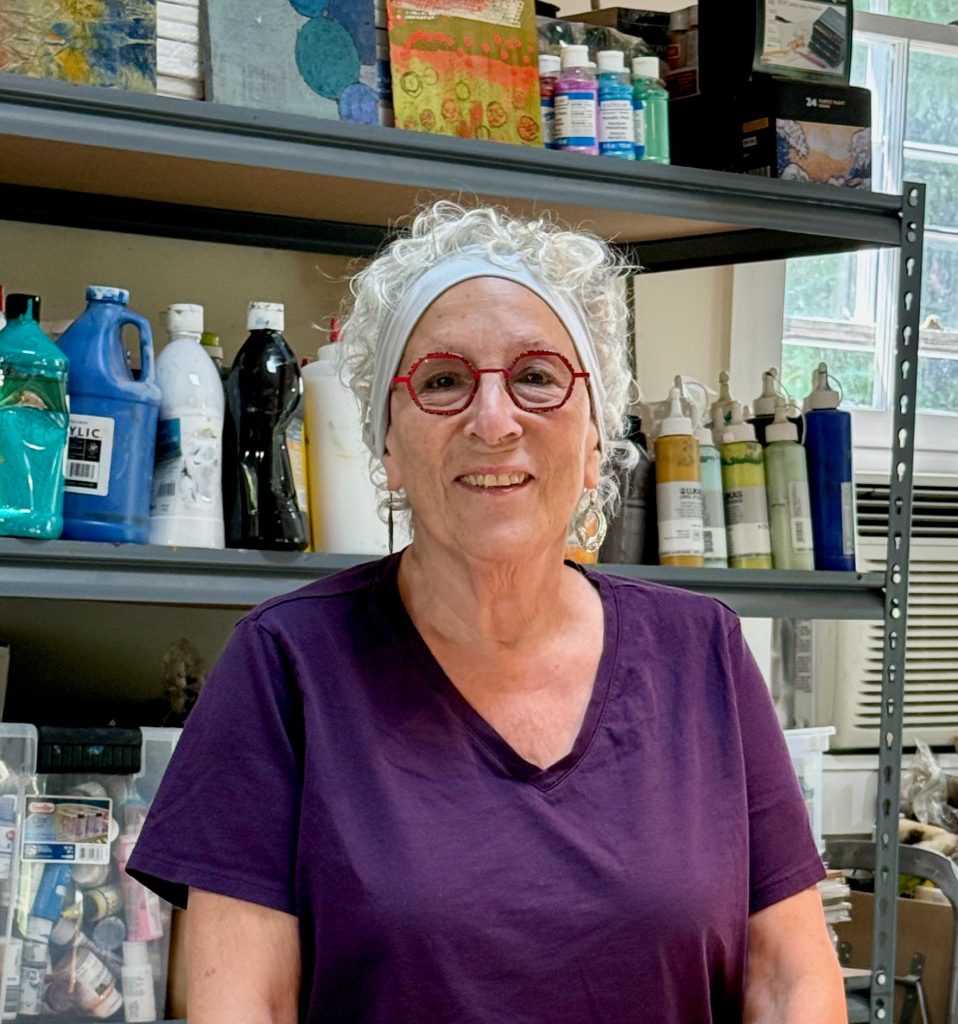
I began developing this program as I approached my 70th birthday. At the time, I was still working as a psychotherapist. I had raised a son, built a studio, and was joyfully immersed in making art—exhibiting regularly at Ceres Gallery, a feminist, artist-run space in New York where I’d been a member for many years.

One important thing to know about me: I wasn’t formally trained as an artist. I took classes and workshops here and there, but mostly I taught myself—exploring different media, following my curiosity, and making things up as I went along. And I loved it.

Over time, I noticed something. When I was making art, I could shed the weight of the world, even briefly. I felt deeply present, recharged, and more at ease in my body. I could forget physical discomfort or daily worries. And I began to wonder: what makes that kind of freedom possible? Could others experience it too?

Aging is often framed as a story of loss—of energy, identity, purpose, creativity, relevance. But that’s not the whole story. What if aging could also be a time of growth, renewal, and self-discovery? And what if art-making—as process, as play, as meditation—could be the way in?

In my own studio, I found that the more I let go of expectations and the need for something to be “good” or “right,” the more something opened up. I felt alive, present, most myself.

I came to believe that creative expression—especially when approached with openness and playfulness—is one of the most powerful tools we have for aging well. It keeps us mentally and emotionally flexible. It sparks joy. It builds resilience. It reconnects us to our inner lives and to something larger than ourselves.

Artful Aging: Re-Enchantment through Art/Play grew out of these insights, experiences, and joyful experiments. It’s the culmination of my life’s work—as a therapist, social scientist, artist, and seeker—and a celebration of the transformative power of creativity.

Now, I offer it to you—with the hope that it might spark your own sense of curiosity, courage, and wonder. You don’t need to be an artist. You just need to show up, let go, and see what unfolds—at any age.

Questions About Artful Aging

How does Artful Aging differ from other art classes?
Artful Aging is less about mastering technique or creating polished artwork and more about experimentation, spontaneity, and play. You will learn skills— many of them—but our focus is on being present, letting go of perfectionism, and engaging with the creative process in a way that is joyful and liberating.
Perfect! You don’t need to draw a straight line—in fact, you’re encouraged not to. I never learned to draw formally myself. In Artful Aging, we celebrate crooked lines, messy beginnings, and surprising outcomes. We’re not aiming for realism but for expression, exploration, and freedom.
Absolutely. While Artful Aging was created with elders in mind, the exercises and practices are valuable for people of all ages—adults, parents with children, caregivers, therapists, or anyone curious about creative expression. The class can be adapted for use in homes, schools, shelters, hospitals, and community centers. If you’re looking to reconnect with your creativity or find new ways to grow, this class is for you.
Research shows that older adults who engage in art-making experience a range of positive outcomes: improved mood, increased resilience, better balance, fewer medications, and reduced isolation. But beyond the data, artmaking offers a chance to practice presence, build flexibility, explore new perspectives, and find joy in the moment. These are essential ingredients for aging with vitality and meaning.
While novelty does stimulate the brain, emotional and psychological strengths—like flexibility, courage, and acceptance—are just as important as we age. In Artful Aging, you’ll be encouraged to try new things, take creative risks, and let go of attachment to outcomes. This nurtures presence, playfulness, and the ability to meet change with grace—skills that serve us in art, and in life.
Artful Aging is designed to be accessible and meaningful whether you’re working alone or with others. You can follow the exercises solo at your own pace—or better yet, form a small art group with friends. If that’s not possible, you’re welcome to join our private Facebook group where participants share work, offer encouragement, and stay inspired together.
Not at all. Artful Aging is for everyone—from complete beginners to lifelong makers. Most exercises use simple, affordable materials like tissue paper, acrylics, scissors, and glue. You’ll receive suggestions, but part of the fun is using what you already have and making it your own.
That’s perfectly normal—and a sign you’re in the right place. Many participants come in doubting their creativity and leave feeling amazed by what they’ve made. Artful Aging offers a safe, supportive environment where you can rediscover the joy of making without pressure or judgment.
While Artful Aging is therapeutic in nature, it’s not a therapy group. It draws from my background in psychotherapy, but it’s structured around art/play as a tool for personal growth, connection, and renewal. Many people find it deeply healing—but the emphasis is on creativity, not counseling.
Yes! Artful Aging is a wonderful shared experience, especially when done with a friend, partner, or relative. It can open up new ways of connecting and spark meaningful conversations. The class is accessible to people of different abilities and backgrounds.

Artful Aging Testamonials

As a newcomer to the making of art, for me this class served many purposes, some of them initially surprising. I expected a relatively formal, quiet, cerebral setting in which I would struggle alone to make sense of unfamiliar concepts and materials. “This class would be good for you,” a neighbor who is an artist told me. “Yeah, like an elliptical machine is good
for me”, I thought to myself.

What a surprise! I have taken Artful Aging for almost a year, and it has been a transformative, joyful, and fun experience. I was initially hesitant about my abilities, but with the encouragement of the teacher and other students,
I gradually relaxed and began to feel more at home with the experience. I would identify this process of relaxing and opening myself up to something very new as one of the most important parts of this class. As a fairly driven
and experienced professional, I realized that my many years of work had made me defensive about attempting something new.

I think my brain has changed as a result of this class. The way I think doesn’t feel quite as linear. I have always been a museum-goer, but now I
experience art in a different way. I feel as if I can enter into it more, or let it enter me. And my interests in various kinds of art have broadened.

Judy Greenwald is a wonderful teacher. She doesn’t teach “top down”. Rather, she helps students learn by giving enough instruction to get one
started, and then encouraging and standing by to give suggestions. Most of all, she communicates a joy that is so motivating you can’t help but put aside your defenses and just dive in (ok, maybe not dive in, but at least put a toe in). She prepares each class carefully, and provides helpful demos and warm-up exercises. Her warmth, hospitality, and sense of humor create a community among the people in the class. She sees potential in everyone – genuine potential.